
A family tree is a print project, not only a research project
Many families have someone who has spent years collecting names, dates and stories: an aunt with a folder of birth certificates, a grandfather who remembers who married whom in the village, or a cousin with an online genealogy account. The research is often the hard part. Turning it into something the whole family can look at, on a wall or spread out on a table at a reunion, is where many projects stall.
A printed family tree chart is one of the most loved things we print. It gets pointed at, argued over and photographed at every gathering. This guide covers how to prepare the information, which layout suits your family, how big to print so names can actually be read, and which paper and finish to choose.
Step one: collect and tidy the information
Before you think about design, decide what each person's entry will show. The more consistent the entries, the cleaner the chart looks.
- Names. Decide on one format and use it everywhere. Full name, or first and last name only? Include maiden names in brackets? Chinese, Tamil or Malay names alongside English names? Mixed formats make a chart look messy.
- Dates. Birth year only, or full date? Birth and death years in the form "1932 to 2011" are usually enough for a wall chart and keep entries short.
- Places. Nice to have for older generations ("born in Penang"), but they make every box wider. Many families keep places for the oldest generations only.
- Photos. Small portraits make a chart much more personal, but they need a lot of space and good scans. If you have old photos to digitise first, our guide to scanning and reprinting old family photographs explains how.
Think about privacy for living relatives. A chart hanging in a living room is seen by guests, and some people prefer their full birth date not to be on display. Birth year only for living people is a common compromise.
Finally, ask one or two older relatives to check the list of names and spellings before any design work. Correcting a name on a spreadsheet takes seconds; correcting it on a printed A1 chart means a reprint.
Choosing a layout
The layout depends on whose story the chart tells. There are four common types.
Ancestor chart
Starts with one person, often a child or grandchild, and goes backwards through parents, grandparents and great-grandparents. Each generation doubles: 2 parents, 4 grandparents, 8 great-grandparents, 16 great-great-grandparents. Five generations including the starting person is 31 boxes, which fits well on A2 or A1.
Fan chart
An ancestor chart drawn as a half circle, with the starting person at the centre and each generation in a wider ring. It is decorative and compact, but the outer rings get narrow, so names in older generations need short entries.
Descendant chart
Starts with one couple, often great-grandparents, and shows all their children, grandchildren and great-grandchildren below. This is the favourite layout for reunions, because every cousin can find their own branch. It can get very wide in big families, which affects the print size.
Hourglass chart
A person or couple in the middle, with ancestors above and descendants below. A good choice for a wedding or anniversary gift built around one couple.
Most genealogy software and online family tree services can export charts as PDF, and many let you choose the layout, the box style and which details to show. You can also build a chart in a design program, which gives more freedom with fonts, colours and photos.
Print size: making sure names can be read
The most common problem with printed family trees is text that is too small. A chart with 120 people squeezed onto A3 looks impressive from a distance and is impossible to read up close. Work out the size from the number of people and how far away people will stand.
| Paper size | Dimensions | Comfortable number of people |
|---|---|---|
| A3 | 297 x 420 mm | Up to about 30 with short entries |
| A2 | 420 x 594 mm | About 30 to 60 |
| A1 | 594 x 841 mm | About 60 to 120 |
| A0 | 841 x 1189 mm | About 120 to 250 |
| Custom long banner | For example 600 x 2000 mm | Very wide descendant trees |
These are rough guides, since the length of names and whether you include photos makes a big difference. A better test: for a chart on a wall, names should be at least 12 pt at final size, dates can be a little smaller, and the text should be readable from about a metre away. Print one section of the chart at 100 percent scale on your home printer and pin it to a wall to check.
Very wide descendant charts do not have to fit a standard paper size. Wide format printers print on rolls, so a long, narrow chart for a hallway or a reunion hall is quite normal.
Design tips that keep a big chart readable
- Use one clear font. A simple serif or sans-serif in two or three sizes. Decorative script fonts are hard to read in small sizes and with long names.
- Colour by branch. Giving each child of the founding couple a colour helps everyone find their branch quickly. Keep colours soft, so black text stays readable on top.
- Leave space for new people. Families grow. A little empty space at the end of each branch lets you add new babies in the next version without redesigning everything.
- Add a title and date. A line such as "The Tan family, descendants of" followed by the founding couple's names and "updated 2026" tells future readers what they are looking at and when it was made.
Paper, finish and mounting
How the chart will be used decides the material.
- Framed on a wall: matte photo paper or a fine art paper gives a calm, glare-free finish. Standard frame sizes like A2 and A1 make framing easy.
- Rolled out at reunions: a heavier paper with matte lamination survives many hands, being rolled up and written on with sticky notes.
- Displayed at an event: mounting on foam board makes the chart stand on an easel without a frame. For very large charts, a fabric or vinyl banner can be rolled and carried easily.
- Given as gifts: a smaller A3 version for each family branch, printed from the same file, costs little extra once the main design is done.
Printing your family tree with us
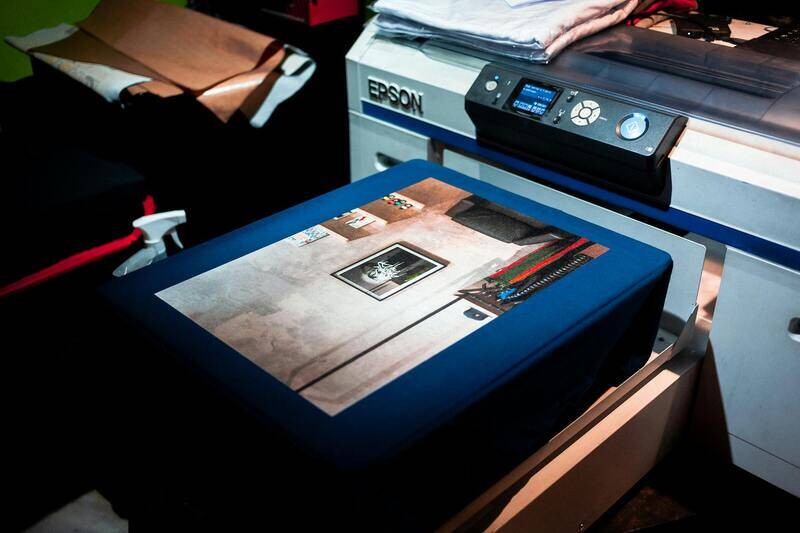
We print family tree charts from A3 up to A0 and custom long formats through our wide format printing service, on matte photo, fine art and heavy poster papers, with optional lamination or foam board mounting. Send us a PDF from your genealogy software or design program, and we check the text size at the final print size, the sharpness of any photos, and whether the chart fits the chosen paper without awkward cropping. If the names are too small, we will say so before printing and suggest a larger size or a split into two charts.
For charts built around photos, our large photo prints options show the papers available, and our article on building a gallery wall from your own photos has ideas for hanging the chart among family pictures. Ready to print, or want a quick opinion on size? Contact us with the file and the number of people in the tree.
The best moment with a printed family tree usually comes at the first gathering after it goes up, when the youngest cousin finds their own name at the bottom and follows the line all the way to the top.
